Water safety for children: Why it should be a 365-day priority

You buckle your child in every time they get in the car. It’s automatic. Not because you expect an accident - but because you're protecting what matters most. So, why don’t we do the same when our child steps into water? Whether it's the sea, a pool, a lake, or a river - where are the “seatbelts” then?
Water isn't a toy, even though it's the world's biggest playground. To play safely in and around it, kids need to know how to swim - and how to stay safe.
Can your child swim?
It may sound harsh, but a child can drown silently… in less than 30 seconds. While you're scrolling on your phone, checking a message, or watching a reel. Water doesn’t forgive a moment of inattention.
Do your kids know how to behave safely around water?
Do you?
This isn’t here to scare you. It’s here to remind us all that water safety isn’t just a summer thing. It’s a year-round responsibility. Every single day.

I believe that by sharing stories and simple examples - even the small ones - we can raise awareness among parents, kids, and their friends. Water safety for children starts at home, and it lasts 365 days a year.
Drowning doesn’t care about season, age, or place
According to the World Health Organization, more than 300,000 people drown every year. Over half of them are under the age of 30. Drowning is one of the top 10 causes of death for kids and young people aged 1 to 24.
In Serbia, around 40 people drown every year on average. Just in July 2024, 15 lives were lost - well above the average. Most of these tragedies happened at unregulated swimming spots, without lifeguards, or involved alcohol.
And no - it doesn’t happen “somewhere else.” It happens here. To us. To our kids.

Water safety for kids - Every second counts
Drowning doesn’t look like it does in the movies. There’s no screaming. No splashing. A child slips under in complete silence.
Imagine this:
A toddler playing at the riverbank suddenly loses balance.
A teen takes on a dare to swim across a river - and disappears halfway.
A family on a boat - child without a life jacket, dad can’t swim - the boat capsizes.
Sound familiar?
These aren’t hypotheticals. They happened. Some had heartbreaking outcomes.
Open water has its own rules
Waves may be fun, but they’re not toys. They can knock you under or pull you out. A floaty or inflatable can drift out to sea in seconds - I’ve experienced it myself.

Here in Serbia, the land of Olympic swimmers and water polo champs, over half of young people are non-swimmers. Incredible, but true. And many of those who think they can swim are what we call “half-swimmers”- they can float, but panic if they lose footing, get tangled in weeds, or caught in a current. That’s where accidents happen.
Parents - Do you know how fast it happens?
In the time it takes to glance away - your child could be in danger.
That’s why:
Always stay within arm’s reach.
No phones. No distractions.
Water demands your full attention.
Just like seatbelts in a car, we must:
Never let kids enter water unsupervised.
Make sure they wear life jackets on boats.
Teach them to swim from a young age.
Teach basic rescue skills and respect safety signs - no matter how well they swim.
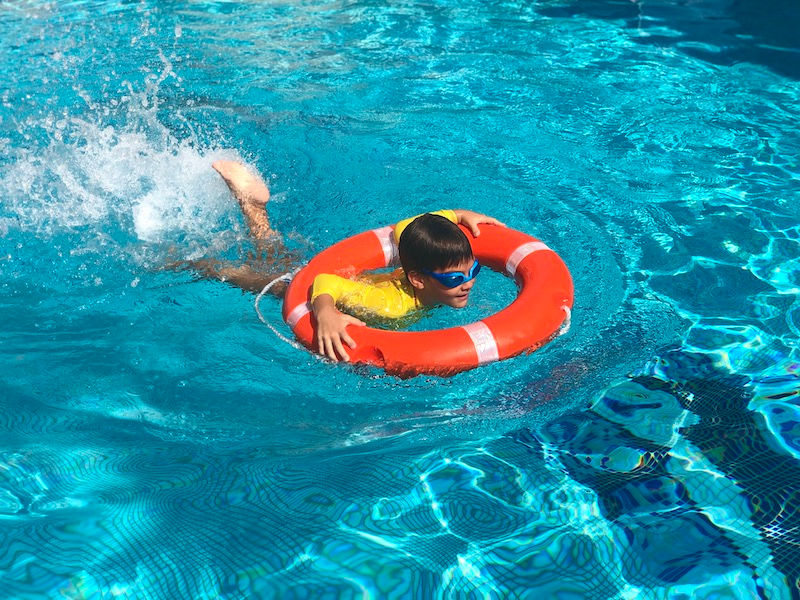
Education is the only true lifesaver - water safety for children
Prevention starts at home.
Water safety for children be taught in schools - just like traffic safety. Swimming schools should teach not only strokes, but survival and rescue basics.
Swimming is important. But water safety is crucial. For kids -and the whole family.

Picture books that teach water safety
Why wait for an accident to happen, when we can prevent it in time?
That’s why I created two educational picture books for kids - from the earliest age - and their parents:
· “Jakov and Petra go swimming” - Rules for safe behavior at the pool
· “Jakov and Petra swim safely” - What every child should know about swimming in open water
Through simple illustrations and everyday scenes at the pool, river, or seaside, children learn how to behave safely around water - without losing the joy of play.
These books are tools for families to prepare for safe water adventures, recognize danger, and prevent injury.
Because prevention is the best protection.
What to tell your child before they go swimming with friends

First and foremost-remind them they’re not lifeguards. In emergencies, they shouldn’t act impulsively. Helping is important - but not at the cost of their own safety. Because if the helper drowns too - it’s no longer a rescue. It’s a double tragedy.
Instead, teach them:
If no adult or trained person is around, look for a floating object (kick board, ball, plastic bottle, water jug) or a rope (shirt, belt, pants, stick), and throw it to the person in danger - from a safe distance.
Also, teach your child what to do if they get into trouble. Floating on their back is a basic survival skill. If they cramp up, get tired, or panic - slow down, flip onto their back, breathe calmly, and stay afloat until help comes.
These skills should be part of PE classes and water safety education in school. But most importantly - taught in swim schools. Because rivers, lakes, pools, and oceans don’t forgive panic. But knowledge can save lives.
Drowning prevention day is not just July 25th
That’s the day we pause to remember that every hour, 30+ people worldwide lose their lives to drowning.
But prevention? It’s every single day.
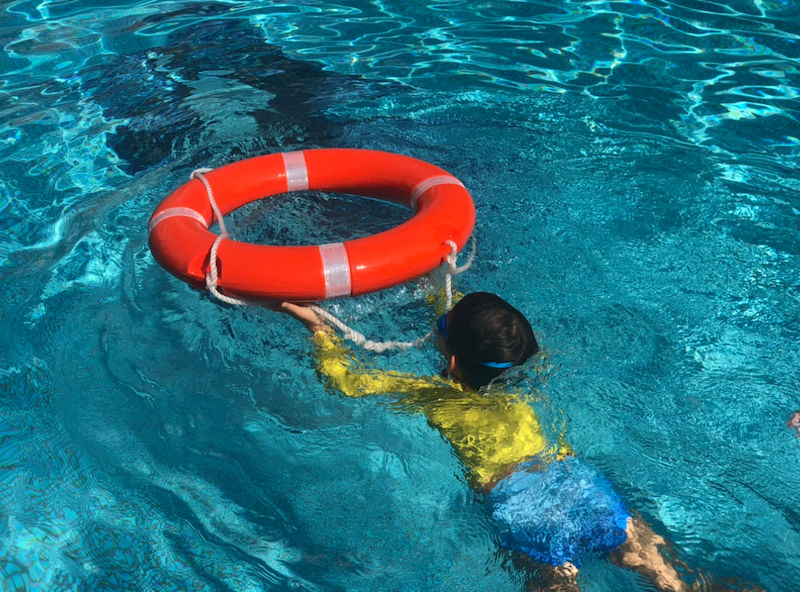
So here’s my message to parents, families, and anyone who spends time near water:
Water safety isn’t just for summer. It’s not just a headline or viral post. There are no replays in real life.
Teach your kids water safety. Every day. By your example.
Change your habits.
Give your kids the chance to swim, play, and enjoy water- safely. Because in the water, there’s no “just one more minute. ”There’s only now - and your attention.
Safety is not seasonal. It’s every day.
Be present. Be the safety role model your kids need.
Because life is better when you're swimming - safely.


Comments