The Healing Power of Swimming: Nurturing Children’s Mental Health Through Water
Updated: Feb 1
In recent years, many children have been struggling with anxiety, insecurity, and a constant sense of pressure. According to UNICEF’s 2025 data, children in Serbia, while 60% of children are physically inactive for more than three days a week.
These numbers are alarming, but there is one simple yet often overlooked solution: movement.
Physical activity, especially swimming, helps children release tension from both their bodies and minds. Water doesn’t demand results. It doesn’t judge. It simply accepts. That is why swimming is much more than a sport; it is a space of freedom, therapy, and empowerment.

Water - The World’s Biggest Playground for Emotions
Swimming is not just a physical activity; it is an emotional dialogue between a child and the water. Water is the world’s largest playground and a safe haven where children can express what they cannot always put into words.
As a coach, I often see children find in the water what they are missing in their day—peace, security, and freedom. Water, just like a blank sheet of paper, “absorbs” everything. In it, a child can let go of emotions, release tension, laugh, cry, and learn how to cope with themselves.
It’s no surprise that many psychologists highlight that regular physical activity, especially swimming, significantly contributes to children’s mental health.
According to UNICEF, physically active children have better concentration, lower anxiety, and greater stress resilience. Swimming, in particular, teaches a child to breathe, to slow down, to feel their own rhythm, and to let go.

A Swimming Coach - More Than a Teacher
Sometimes we are the first to notice that something is wrong—that a child is withdrawing, losing motivation, or behaving_1645320.html) differently. These aren’t “just bad days”—these are signals. That’s when we need to pause, ask, listen, talk to the child, and if needed, talk with the parents too.
Children often tell us things they can’t tell their parents. That isn’t a weakness; it is the strength of a support system working together to keep a child safe, in and out of the water.
As a coach working with children for more than 30 years—from baby swimmers to teens—I’ve learned that behind every drop in motivation stands an emotion. Fear of failure, comparison with others, and pressure to be “the best.” That’s why training should never become an additional burden. Swimming should be a safe place where a child can rediscover themselves.
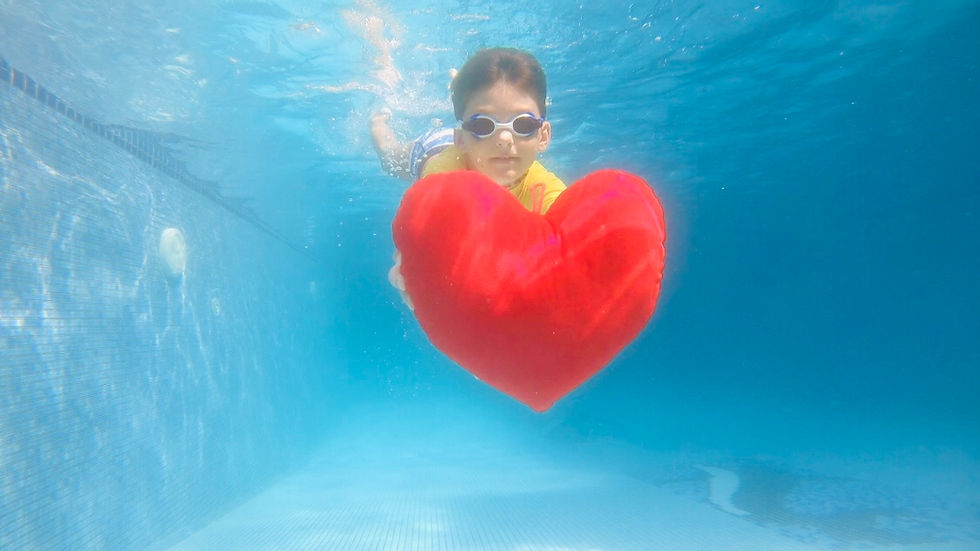
A few years ago, I conducted a small yet meaningful experiment with my young swimmers. The task was simple: before entering the pool, they had to circle how they felt that day—happy, sad, or indifferent.
Believe me, the answers revealed more than words ever could.
Some children came to practice in tears—after a bad grade, being scolded at home, or after a fight with friends. Some appeared completely “emotionless,” like little ice queens and kings shut inside their own world. Of course, there were cheerful, smiling ones, but they were the minority.
And then our real challenge begins: motivate
It’s not easy. But water has a certain magic.
At the end of each session, the children circled their mood again. The result was always the same—every single one chose the smiling face. That is my biggest success. Because I know they will come back tomorrow—not just to swim, but to grow, physically and mentally.

Swimming as Therapy, Not Pressure
Healthy physical effort doesn’t only reset the body; it calms the mind for children and parents alike. When a child swims, they breathe rhythmically, feeling the water and their own movement. That harmony of breath and motion soothes the nervous system.
That is why swimming should feel like therapy, not an obligation. The pool should be a place where a child comes to release tension, not absorb more of it.
Unfortunately, children are already under enormous pressure—school, grades, social media, comparisons, and expectations. If coaches and parents add even more pressure without listening, we lose them.
Swimming should not be a race against others. It should be a journey toward oneself.
When a child feels they will not be criticized for every mistake but encouraged to try again, they begin to enjoy progress in the water—and their confidence grows, both physically and mentally. These lessons last far longer than any swim practice.

Children in the pool must first be safe and relaxed.
I always tell parents: swimming should be healing, not stressful. When the coach, the parent, and the child work as a team, results come naturally—not because they have to, but because the child wants to.
In the water, nothing can be hidden.
Believe it or not, after swimming, children often leave the pool—sometimes without even realizing it—calmer, lighter, and more prepared for everyday challenges.
Emotional Literacy - The Hidden Strength of a Coach
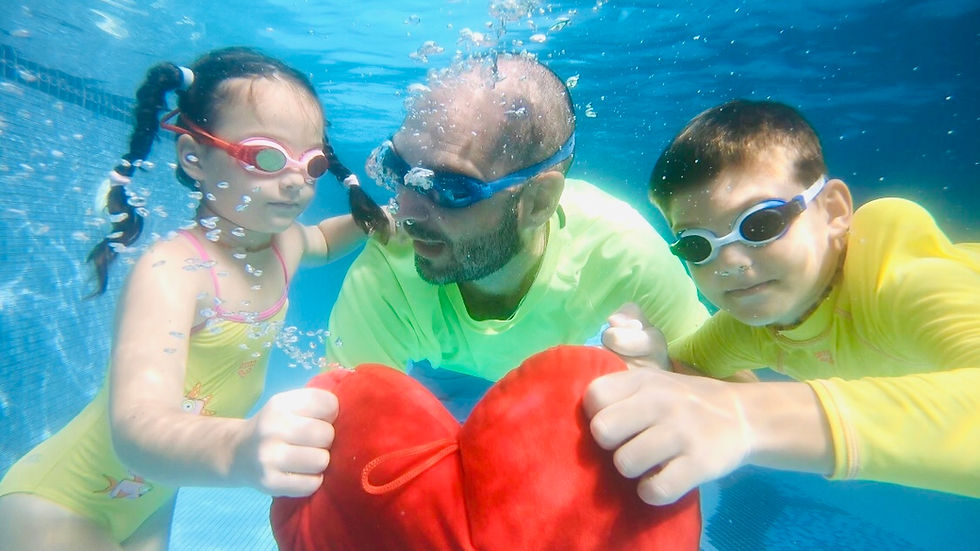
A swimming coach must be emotionally literate—able to recognize when a child can’t push through, when they need a pause, a talk, a game, or encouragement. When we show children that it is normal to talk about feelings, that it’s not shameful to say something is difficult, they adopt that mindset.
I have seen many times how a child who lost the desire to come to practice, with the right approach, support, and playful adjustments, suddenly starts enjoying the water again.
A child “blooms” when they feel seen. That is the invisible but essential role of a coach—supporting children’s mental health through swimming.

Mental Health Begins in the Water
Mental strength is not built only through discipline but through connection, trust, and the feeling that you are not alone.
Through swimming, children don’t just “build muscle”—they build character, emotions, and resilience. They learn to breathe when things get hard, to push back when they sink, and to try again. The pool is often the first place where a child learns how to cope—not just with water, but with themselves.
So, parents and coaches—listen, observe, don’t judge.
Parents, talk to your children on the way to practice and after it. You’ll notice the difference. Coaches, listen to them as they swim, even when they are silent at the pool’s edge.
Some children fight their hardest battles in silence, in the water. Our responsibility—both parents and coaches—is to ensure they never fight those battles alone.
Because swimming and children’s mental health are not a luxury; they are the foundation of a healthy childhood.
For many children, that foundation begins right here—in the pool. And the responsibility is on all of us.


Comments